You've seen the same beach photograph in three different Airbnbs. The same abstract watercolor print in a dozen coffee shops. Stock art is everywhere — and that's exactly the problem.
What stock art actually is
Stock art — whether it's photography, illustration, or digital art — is created once and licensed to anyone willing to pay for it. The image of a misty mountain path hanging in your office lobby is probably also hanging in a hotel in Denver, a dentist's waiting room in Atlanta, and a startup's conference room in San Francisco.
There's nothing wrong with the images themselves. Many are beautiful. But they carry no connection to the person who put them on the wall — because the person who put them on the wall had nothing to do with creating them. They just picked from a catalog.
What makes AI-generated art different
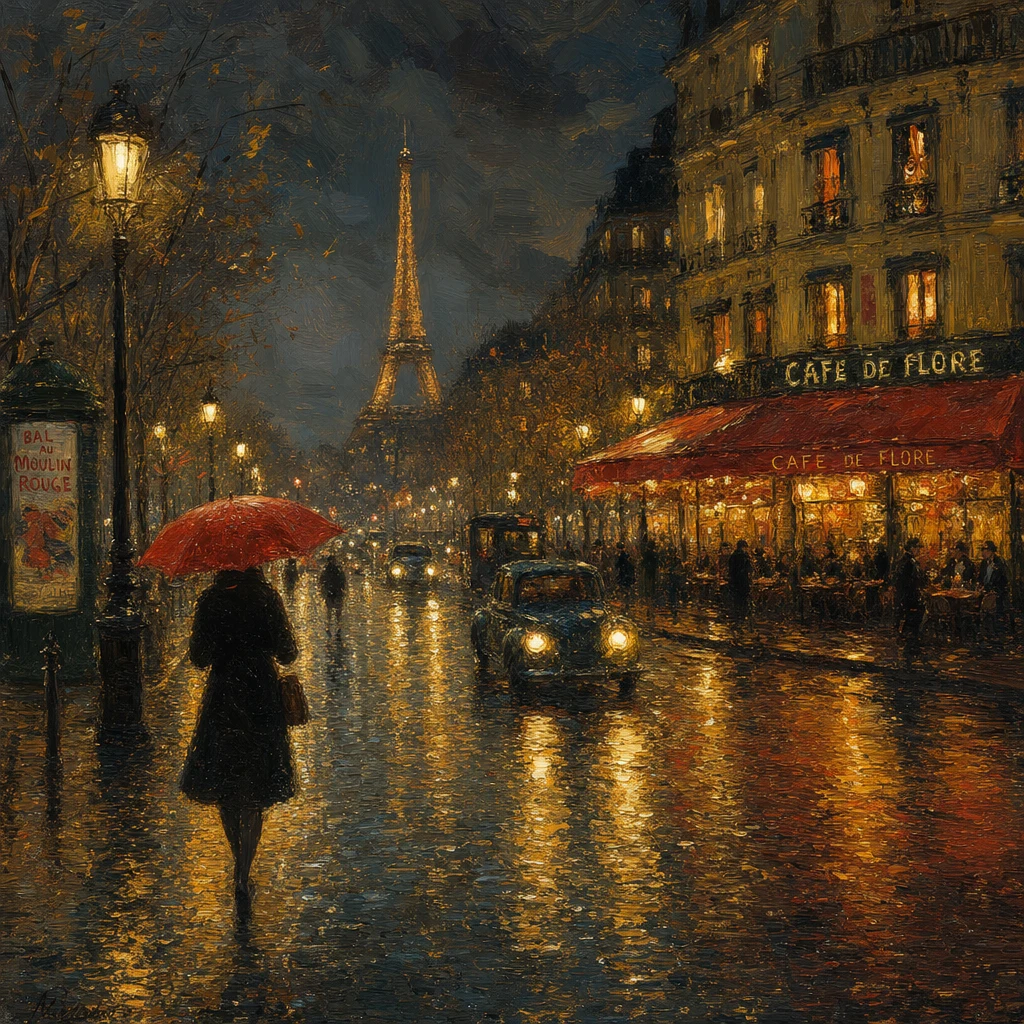
When you generate art with DriftPrint, you're the one who wrote the description. You chose the style, the mood, the subject. The resulting image has never existed before and will never be created again for anyone else.
That's not marketing language — it's literally how generative AI works. Two people typing the same prompt get meaningfully different results. The model doesn't have a catalog it's pulling from. It's synthesizing something new each time.
The result is art that is genuinely yours in a way that stock art never can be. It started as an idea in your head.
The cost comparison
You might assume original art is always more expensive than stock. At the gallery level, yes. But that's what DriftPrint upends. A professionally printed, one-of-a-kind AI artwork starts at $30 — comparable to a decent stock print from a big-box retailer, and far less than anything commissioned from a human artist.
You're not paying for scarcity or exclusivity as a luxury. You're paying for production. The originality is just the natural byproduct of how the technology works.
Where stock art still makes sense
We're not anti-stock art. For some contexts — professional offices, rental properties, commercial spaces where you're not trying to express personal identity — stock art is efficient and perfectly appropriate. If you need to fill 40 walls on a tight timeline, a stock licensing subscription makes sense.
But for your home, your personal space, the walls you actually live with? That's where originality matters. Your home should feel like you. Stock art makes it feel like a hotel.
Make something that's actually yours.
Generating is free. You only pay when you find a piece you love.
Start Creating →