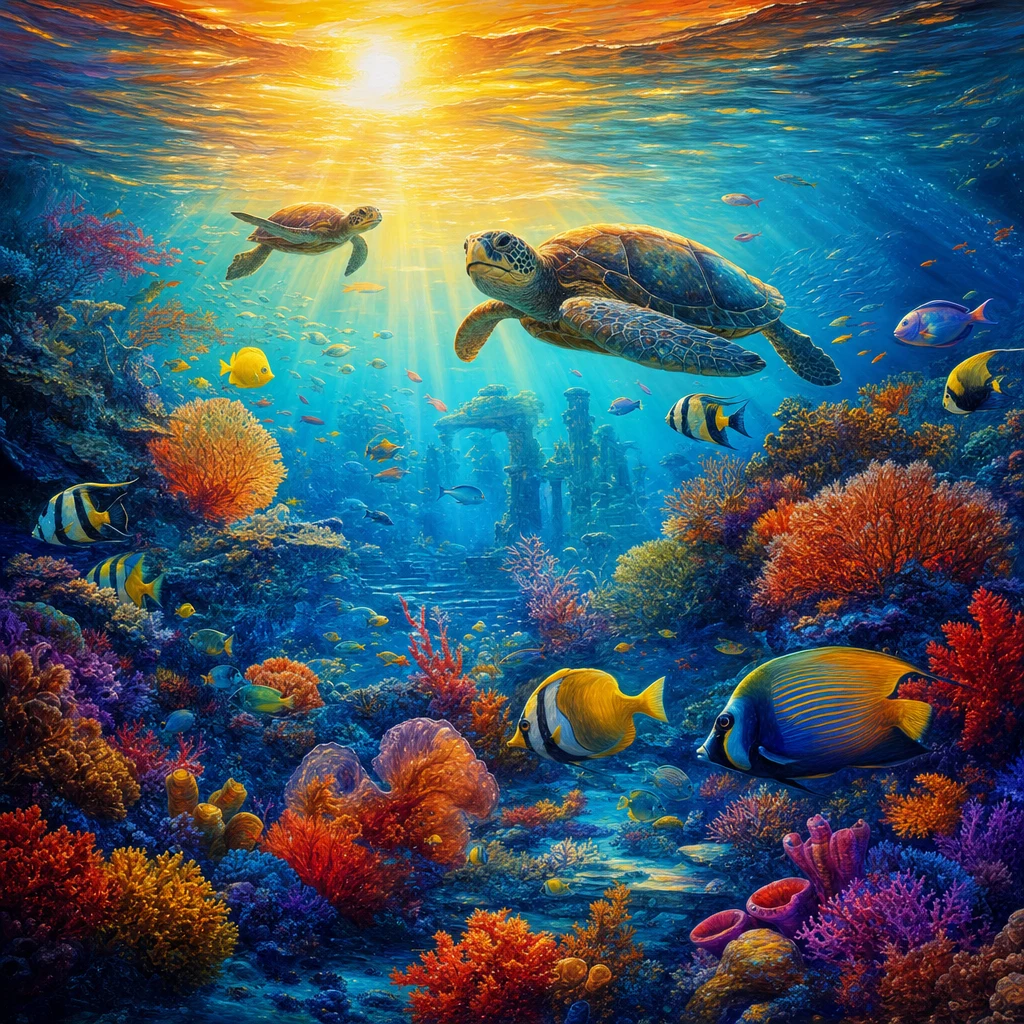
It Starts With Learning to See
AI image generators are trained on enormous collections of images paired with descriptive text — think hundreds of millions of examples scraped from across the internet. Over time, the AI learns the patterns that connect words like "misty forest" or "warm golden hour" to the visual textures, colors, and shapes that actually look like those things. It's less like programming a machine with rules, and more like teaching a very fast learner through sheer exposure. By the end of training, the AI has built a deep, nuanced sense of how language and visuals relate to each other.
From Words to Image: The Creative Leap
When you type a prompt, the AI doesn't search a database for a matching picture — it generates a completely new one from scratch, pixel by pixel. Most modern systems start with pure visual noise (imagine static on an old TV) and then gradually refine it, guided by your words, until a coherent image emerges. This process, called diffusion, is a bit like slowly developing a photograph in a darkroom, except the image never existed before. Each generation is unique, which is why the same prompt can produce subtly different results every single time.
Why the Results Can Feel Like Real Art
Because the AI learned from so much human-made art, it naturally absorbs artistic styles, compositional rules, and even emotional moods — the warm intimacy of impressionism, the clean geometry of modernism, the drama of chiaroscuro lighting. When you ask for something specific, it blends all of that learned knowledge to meet your intention. The result isn't a copy of anything; it's a synthesis shaped by your words and the AI's vast visual memory. That's why a platform like DriftPrint can take your prompt and turn it into something that genuinely feels crafted, considered, and ready to hang on a wall.
Turn Your Words Into Wall Art Today
Generate a free preview with any of 28 styles — no commitment until you love it.
Create Your Print